
High‑mix, low‑volume (HMLV) electronics manufacturing means producing a wide variety of electronic assemblies in relatively small batch sizes, using highly flexible equipment, processes, and sourcing strategies to handle frequent changeovers. This low-volume, high-mix manufacturing approach enables customization, responds to market shifts, and moves from prototype to production without the long changeovers and large-batch inventory exposure of a pure high-volume model.
According to Altium, growth in the electronics manufacturing market is increasingly tied to high‑mix, low‑volume production, which emphasizes flexibility, customization, and rapid iteration. As customers expect more specialized and configurable products, manufacturers are shifting toward production strategies that can support greater product variety without sacrificing speed or quality. In electronics manufacturing, this makes flexible, HMLV‑ready capabilities a meaningful competitive differentiator.
What high-mix, low-volume really changes in electronics manufacturing
In electronics manufacturing, “volume” is how many units you build per run, and “mix” is how many distinct assemblies or SKUs you support. As mix increases, volume per SKU usually decreases. But what matters to engineers and supply chain teams is what that does to setups, schedules, and risk.
In high‑mix electronics manufacturing, each new assembly can mean PCB prototyping, an SMT line setup, updated work instructions, and a dedicated test strategy or fixture. The constraint becomes how many unique builds and design changes your team can manage without sacrificing yield, cost, or on-time delivery. In HMLV, the levers shift toward changeover time, material availability on smaller lots, and how quickly you can validate changes across many SKUs.
By contrast, a high-volume, low-mix model is optimized around line capacity and incremental yield and cost improvement on a small number of stable products.
Frequent changeovers and setup optimization
Frequent product changeovers require updating line setups, confirming documentation, and re‑verifying test and inspection steps, which can quickly reduce effective production time if they aren’t well controlled. In high-mix environments, poor setup control shows up as lost capacity, higher error rates, and scheduling issues.
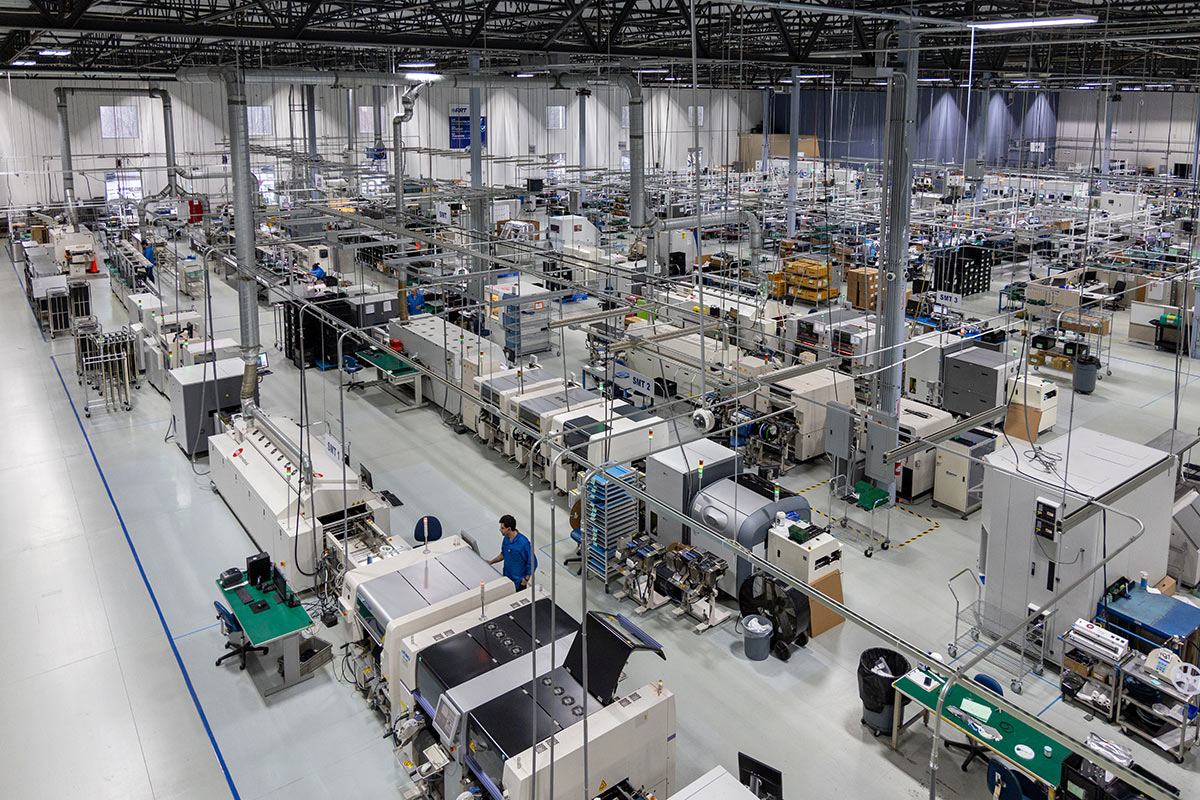
At CO-AX Technology, advanced automation, multiple SMT lines, dedicated NPI, and experienced operators enable us to turn over lines quickly while maintaining consistent quality and on-time performance.
Supply chain complexity in high-mix electronics manufacturing
On the supply chain side, high-mix manufacturing requires sourcing diverse components from multiple suppliers, managing inventory for thousands of unique parts, and navigating component obsolescence across multiple product lines. The traditional “forecast, buy, hold” inventory approach can lead to excess stock and obsolescence risk, while under-ordering components increases the risk of production stoppages when parts are unavailable.
Onshore, domestic manufacturing partnerships can soften these risks by shortening logistics chains, improving communication, and making it easier to react quickly when a component goes short or a BOM changes late in the process. At CO-AX, our buyers work alongside OEMs to understand demand and ensure transparent communication about supply chain options. We combine turnkey strategic sourcing and vetted supplier relationships with industry-leading lifecycle and availability software, giving customers earlier visibility into risk, practical alternatives, and a partner that can respond quickly when demand or component availability changes.
Quality control and traceability
In a high‑mix, low‑volume environment, each product variation can come with its own specifications, test coverage, and documentation, and those expectations can change as designs and components evolve. That makes it harder to rely on a single standard process and increases the need for clear work instructions, disciplined change control, and robust inspection and testing for every build.
Traceability becomes especially valuable in this context because you’re running many smaller, different jobs rather than a few very large ones. Instead of asking “what went wrong on this line today?”, engineers and quality teams need to know exactly which material lots, process steps, and revisions were involved in a specific work order so they can isolate issues without over‑correcting or disrupting unrelated products.
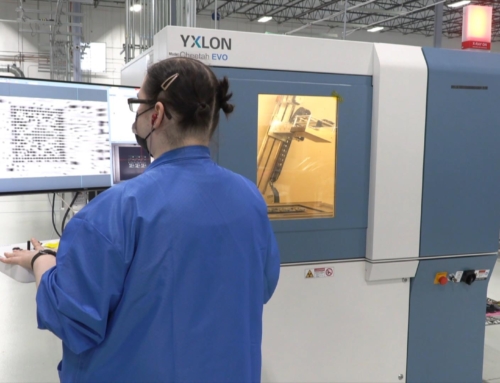
At CO‑AX, our ISO‑certified quality system, combined with MES‑driven traceability, records materials, process history, and yield data from incoming inspection through PCB assembly and finished products, so we can quickly identify which units are affected if a component, process, or field issue arises. That level of visibility is especially important for the medical, aerospace, and industrial customers we serve, where even low‑volume builds must meet stringent regulatory and audit requirements.
Key considerations when choosing your manufacturing model
From a business standpoint, high-volume, low-mix and high-mix, low-volume manufacturing create value in different ways. High-volume relies on economies of scale and incremental yield and cost improvements, while low-volume supports fast-moving or specialized markets. For OEMs and their contract manufacturers, the question isn’t “which model is better?” so much as “which model best fits this product’s demand profile, lifecycle, and quality requirements–and can we execute it efficiently?”
When evaluating your production needs, consider:
- Product lifecycle stage: Early in the lifecycle, new product introductions often run as low‑volume, high‑mix builds to validate the design, tune test coverage, and gauge demand. As the product gains traction and forecasts become more predictable, it can make sense to migrate to higher‑volume, lower‑mix production for cost efficiency.
- Market segmentation and customization: Products aimed at multiple niches, customer‑specific configurations, or frequent feature updates typically fit better in a high‑mix environment. If your roadmap includes many variants, options, or customer‑specific SKUs, you’ll get more value from a partner whose lines and processes are optimized for HMLV rather than a single “one size fits all” high‑volume flow.
- Time‑to‑market and design iteration: When speed and learning are more important than unit cost, starting in low‑volume production lets you get hardware into the field quickly, gather feedback, and implement design changes before committing to tooling and capacity for mass production. As the design stabilizes and volumes grow, you can then decide whether to keep it in an HMLV model or transition it to a more standardized, higher‑volume line.
CO-AX excels in high-mix and low-mix electronics manufacturing
CO‑AX is built to support OEMs across the full spectrum—from early, high‑mix, low‑volume programs and prototype PCB assembly through to more stable, higher‑volume production. Our dedicated NPI capabilities, multiple SMT lines, and flexible processes enable us to move quickly on complex, low‑volume builds without sacrificing quality or schedule performance. As products mature, we can scale into more repeatable production, applying lessons learned from prototype and pilot runs to improve yield, cost, and reliability.
Because we pair manufacturing with strong engineering collaboration, supply chain expertise, and MES‑driven traceability, customers don’t have to choose between a partner that understands HMLV and one that can support higher‑volume demand. CO‑AX works with OEM engineering, quality, and supply chain teams to align the manufacturing approach with each product’s lifecycle, regulatory requirements, and market needs—so you can customize where it matters, manage risk, and still hit your cost and time‑to‑market targets.
Let’s Work Together. Reach out for help with your PCBA and turnkey box build assembly needs.