

Printed Circuit Board Design for Manufacturing
PCBA Design for Manufacturing Mastery
When you bring your design to CO-AX, our design and manufacturing engineers get to work on making sure your product is optimized for manufacturing at any volume.
We are experts at Design for Manufacturing (DFM), giving you peace of mind that your product will function as specified and meet your requirements for cost, time, yield, and scalability. Whether adding PCBA manufacturing capacity, transferring or onshoring your contract manufacturing or introducing a new product to market, you can be sure your PCB designs are meticulously reviewed and tested to ensure success.


Proven Design for Manufacturing Processes
We use industry-leading electronics software packages, including Solidworks, Altium, and SiliconExpert, to assess and evaluate your document package and mitigate risk. Our skilled design engineers first complete a thorough design evaluation before sending it to our supply chain team for a Bill of Materials (BOM) check.
Your product is then sent to our dedicated prototyping line to verify its assembly and manufacturability. Because this line is strictly used for new product onboarding and introductions, a prototype can be completed in as little as two weeks from receipt of materials.
The prototypes are then tested using customer-provided test fixtures – or we can build test fixtures for you. Once this process is complete, we conduct a comprehensive design and PCB manufacturing review with you before sending your final design to production.
Integrated Design for Manufacturing Engineering Services
Our in-house design engineers also partner with you to enhance and finalize designs. We will help you convert a design, add features such as wireless communication, complete a prototype printed circuit board design, and develop test fixtures. In this era of supply chain challenges, our team can also help you Design for Availability.
Our expertise in DFM, combined with our product development experience in industrial, medical, consumer, aerospace, and smart devices, means we can help you reduce your time from concept to production while maximizing your profits. Our in-house electronic, mechanical, hardware, and software/firmware engineers include many with master’s and Ph.D. degrees from prestigious universities.
We go above and beyond every day to ensure our customers’ complete satisfaction. We have an unwavering commitment to quality, transparency, integrity, and accountability in all we do. Perhaps that’s why our customers consistently rate our design for manufacturing services as exceptional.
Our advantages include:
Contact a CO-AX Design Engineer
PCBA, Cable and Harness, and Box Build Design Proficiencies
- Circuit Board Schematic and Layout Design
- Circuit Redesign and Enhancements
- Wire Harness and Cable Designs
- Complete Box Build Designs
- Turnkey Custom Projects
- Electronic System Integration
- Software Engineering
- Hardware and Complete System Design
- Embedded Systems and Software Design
- PLC Controllers
- RF Design
- Signal Conditioning – Analog and Digital
- THT to SMT Conversion
- DFM and Design for Test
- RoHS Compliance Design and Development
- US and International Compliance Testing
Customer Success Stories
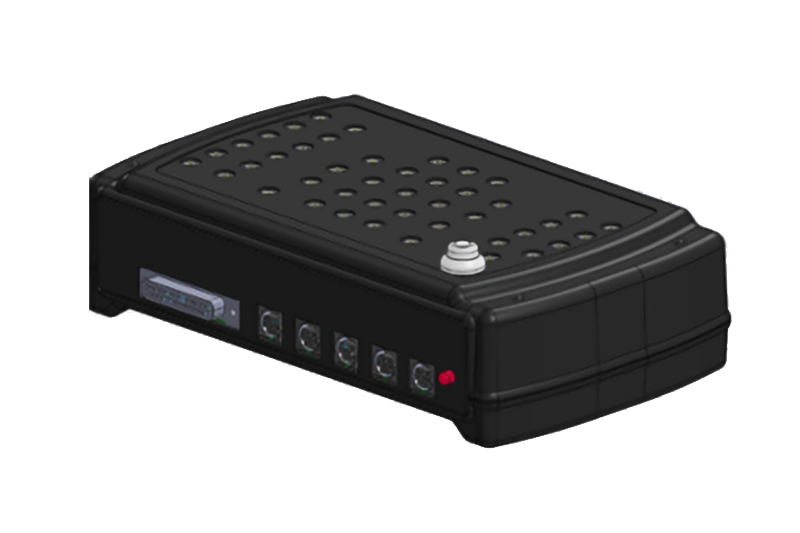
This medical electronics customer needed a device to monitor brain signals for clinical research. The product had to be low noise while providing exacting measurements.
The design engineering team at CO-AX completed the electrical and mechanical designs and delivered a turnkey FDA-cleared product including the enclosure. Advanced I/O ports for were also included for future generation devices.
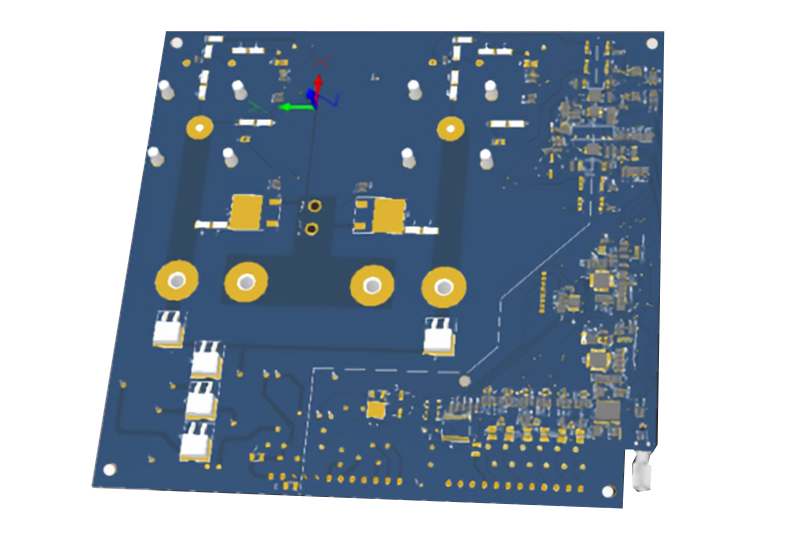
This industrial customer asked CO-AX to design a PCB with two MCUs to monitor and detect arcs, and shut down the system within milliseconds to limit any damage.
CO-AX created a cost-effective, one-time use PCB including firmware and self-testing capabilities.

Download our Capabilities Sheet
Learn more about how CO-AX can help your business succeed!



What is Design for Manufacturing?
Design for manufacturing (DFM) is a set of guidelines and best practices used to optimize the workflow for a more efficient and cost-effective manufacturing process. In the context of a printed circuit board assembly (PCBA), DFM incorporates key considerations to simplify and streamline its assembly.
Key considerations can include component selection, placement, the PCB layout and even the assembly process. This translates into a quicker build, to move products from concept to the marketplace more efficiently.
Additionally, design for manufacturing enhances traceability and brings accountability to each company and staff member involved in the process, from procurement through assembly. DFM optimizes project lifecycle management with the added goals of reducing labor, increasing yield and improving performance.
How to design a printed circuit board?
Designing a printed circuit board requires careful planning and execution through several essential steps:
- Define requirements: Establish clear specifications, including board size, layer count, and performance needs.
- Create schematic: Develop a detailed circuit diagram showing all components and their interconnections.
- Component selection: Choose appropriate parts based on functionality, availability, size, and cost.
- Component placement: Arrange parts logically for optimal signal flow and thermal management.
- Route traces: Connect components according to the schematic while maintaining proper clearances.
- Design power delivery: Ensure adequate power distribution with appropriate trace widths and planes.
- Add design rules: Implement manufacturing constraints for trace width, spacing, and holes.
- Perform DRC: Run Design Rule Checks to verify compliance with manufacturing limitations.
- Generate manufacturing files: Create Gerber files, drill files, and BOMs for production.
- Review design: Conduct thorough verification before submission to the manufacturer.
For optimal results, partner with a manufacturer like CO-AX that provides comprehensive Design for Manufacturing (DFM) services. CO-AX’s experienced engineers will evaluate your design using industry-leading software, verify manufacturability on a dedicated prototyping line, and ensure your PCB meets all requirements for cost, time, yield, and scalability. Learn more about our Design for Manufacturing engineering services that can help reduce the time from concept to production while maximizing profitability.
Why do printed circuit boards fail?
Printed circuit boards can fail for numerous reasons throughout their lifecycle. These reasons can range from manufacturing defects to environmental exposure and regular wear. Understanding these triggers or identifying potential problem areas ahead of time can help with the first stages of development, i.e., printed circuit board design and material selection. Design, material selection, and precision manufacturing can help deliver the desired reliability and longevity for electronic devices.
Common causes of PCB failure (in alphabetical order) include:
- Component issues: Substandard components may have shorter lifespans or inconsistent performance. Counterfeit parts might not meet specifications, while improper spacing between components can lead to overheating or electromagnetic interference.
- Design flaws: Insufficient copper thickness may lead to trace failure under high current loads. Improper formations can create weak points, while inadequate thermal management results in hotspots and premature component failure.
- Electrical problems: Electrostatic discharge (ESD) can instantly damage sensitive components. Power surges often cause catastrophic failures, and thermal cycling weakens connections over time.
- Environmental factors: Moisture can cause corrosion and short circuits. Dust accumulation impedes heat dissipation, while extreme temperatures create expansion and contraction stress on solder joints and components.
- Manufacturing defects: Poor soldering can create cold joints with weak connections or solder bridges, causing shorts. Improper cleaning can leave flux residue that attracts moisture and causes corrosion over time.
- Material degradation: PCB substrates can delaminate or warp with age and heat exposure. Copper traces oxidize over time, increasing resistance and reducing performance.
- Mechanical stress: Vibration and physical impacts can crack solder joints or components. PCB flexing can break rigid components or create microfractures in traces, leading to intermittent failures.
- Plating issues: Voids or inconsistencies in through-hole plating disrupt electrical connections. Black pad syndrome (nickel corrosion under gold) can cause solder joint failures that are difficult to detect.
Tackling issues from A to Z, CO-AX Technology minimizes PCBA failure risks through rigorous quality control processes certified to ISO 9001 and ISO 13485 standards. Our comprehensive DFM evaluations identify potential issues before production, while our extensive testing capabilities, including AOI, FCT and FCT, ensure the early detection of any defects.
With our proven expertise in PCBA manufacturing, we deliver reliable, high-performance electronic assemblies that meet or exceed industry specifications even in the most demanding applications. Learn more about our quality standards and manufacturing capabilities at https://coaxinc.com/manufacturing/printed-circuit-boards/.