

Electronics Prototype Engineering and Manufacturing
Highly Optimized PCBA Prototyping Services
With CO-AX, your PCBA design moves from proof of concept to prototype in just one to two weeks from receipt of materials.
We accomplish this through our investment in a dedicated Surface Mount Technology (SMT) line and work cell, which are used solely for onboarding new projects and prototyping of new PCB assemblies. We use the same SMT equipment in our production lines so that you can move from prototype to full-scale production seamlessly.


Integrated Engineering, Prototyping, and Manufacturing Process
It all starts with your document package. Once received, our design engineers and supply chain experts assess and evaluate your design and Bill of Materials (BOM) to ensure Design for Manufacturability (DFM), parts availability, and scalability to full production.
Your product then moves to the NPI line for prototyping. Prototyping ensures your product can be assembled as instructed without defects or inefficiencies. If any exceptions are identified, we work closely with you to resolve those issues. We can then repeat the prototyping process to get your product to its final design.
As part of this process, our team develops clear, detailed work instructions based on the validated prototype, ensuring every step of assembly and testing is standardized for consistent quality and efficient production. Our engineering teams can update your documentation as well, so you know your design, assembly instructions, and BOM remain current.
At CO-AX, we are committed to innovation and helping our customers get their products to market rapidly. Our goal is to take the stress out of the NPI process, creating products that meet your requirements and customer needs while maintaining the highest quality, reliability, and cost-effectiveness.
Let’s Talk About Your Next Project
Rapid PCBA Prototyping for Faster Time to Market
Customer Success Stories
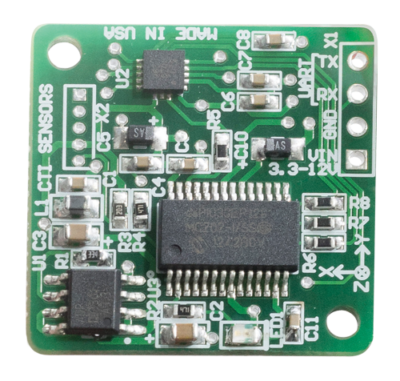
When the principal design engineer at one customer resigned, they soon learned that the engineer had not kept up with assembly revisions. Further investigation revealed that the schematic and drawings were up to seven revisions out of date.
Our engineering team took the original product, drawings, and schematic and successfully developed a smaller, more cost-effective prototype. Our prototype had improved functionality, as well. It is in full production to this day.



What is a PCBA (Printed Circuit Board Assembly) Prototype?
A printed circuit board assembly prototype, also known as a PCBA or PCB prototype, is an initial version or sample of a printed circuit board design created for testing and validation purposes before moving into production. A PCB is a crucial component in electronic devices, providing a platform that houses the components that enable those devices to operate as planned, including resistors, capacitors, integrated circuits, and connectors.
During the development of a new electronic product, it is common to create one or more PCB prototypes to ensure the design functions correctly and meets the desired specifications. A prototype allows engineers and designers to test the circuitry, validate the layout, and identify and correct any potential issues before moving on to large-scale production.
It is during the prototype phase that engineers can implement design for manufacturing (DFM) principles. Certain components may have limited availability, a potential end-of-life notice (EOL), long lead times, or prohibitive costs. The prototype phase addresses scalability and product lifecycle issues early, examining possible alternatives for design and component substitution.
With a qualified electronics contract manufacturing partner, your PCB prototype is manufactured using the same processes and materials as the final production boards – and with a quick turnaround, fast-tracking the testing and validation needed to get to market faster.
How much does it cost to prototype a PCB?
The cost to prototype a PCB varies based on several key factors. Board complexity is primary, with multi-layer designs costing more than single-layer boards. Component selection significantly impacts price, especially when specialized parts are required. Other factors include board dimensions, material specifications, trace requirements, component density, and turnaround time. Market conditions affecting material availability and international tariffs can also cause pricing fluctuations that impact final costs.
Working with an experienced manufacturer like CO-AX helps optimize prototype costs while ensuring quality. Using a dedicated SMT line for prototyping, CO-AX delivers PCBA prototypes in just one to two weeks from receipt of materials, reducing time-to-market while maintaining production standards. This approach enables a seamless transition from prototype to full-scale production without costly redesigns or adjustments typically required when changing manufacturers. Learn more about efficient PCB prototyping in our recent blog post.
What is the difference between PCB prototype and breadboard?
Testing determines whether a prototype moves to full production when developing new electronic products or circuits. This phase during prototyping typically involves two primary approaches: breadboarding and PCB prototyping. Both serve as foundational steps in the product development lifecycle, but they differ significantly in their methodology, purpose, and outcomes.
Breadboards provide a quick and cost-effective way to verify basic circuit functionality and experiment with various components or configurations. In contrast, PCB prototypes represent a more advanced stage that more closely simulates the final product. Understanding the distinct advantages and limitations of each approach helps engineers make informed decisions about which method best suits their specific development needs, timeline constraints, and budget considerations.
The choice between these methods often depends on the circuit’s complexity, the required performance parameters, and the project’s progression within its developmental timeline.
Breadboards
- Reusable, solderless platforms for temporary circuit construction
- Allow components and wires to be inserted and reconfigured quickly
- Ideal for rapid experimentation and educational purposes
- Limited by higher parasitic capacitance and loose connections
- Not suitable for high-frequency circuits or compact designs
PCB prototypes
- Feature etched conductive pathways on rigid or flexible substrates
- Components are permanently soldered for reliable connections
- Provide better signal integrity and professional appearance
- Closely resemble the final product’s form factor and performance
- Enable thorough testing under conditions similar to production units
Why choose breadboards?
- Speed: Circuit concepts can be implemented and modified in minutes instead of days
- Cost-effectiveness: No manufacturing costs for quick concept validation
- Accessibility: Requires minimal equipment and technical expertise
- Iterative design: Facilitates quick component swapping and circuit modifications
- Teaching tool: Excellent for educational settings and learning electronics fundamentals
Why choose PCB prototypes?
- Reliability: Eliminates the loose connection issues common with breadboards
- Signal integrity: Crucial for high-frequency, sensitive, or complex circuits
- Size optimization: Allows for testing in the actual form factor of the final product
- Production preparation: Validates manufacturing processes and component placement
- Professional presentation: Provides a polished prototype for stakeholder demonstrations
While breadboarding is typically handled in-house by engineering teams during early conceptual stages, CO-AX Technology specializes in the next critical step: professional PCB prototyping. CO-AX focuses on bridging the gap between concept and production with a dedicated SMT line for rapid PCB prototyping, enabling customers to transition from a finalized design to a working prototype in just one to two weeks. This approach streamlines the transition to full-scale production without costly redesigns, offering production-quality results that validate both design and manufacturability simultaneously.
Discover CO-AX’s PCB prototyping capabilities at https://coaxinc.com/services/prototyping/.